
Single item and unit block pickups, Northern Beaches
The one couch, the fridge that died on a Sunday, the mattress the last tenant left in the garbage room. We take the small jobs gladly, and we price them the way we price everything: one all-in figure named before the truck moves, with the stairs already in it.
A small job, without the small print
If you're ringing around about one item, you've probably already met the tricks: a teaser rate that holds until the truck arrives, a price per item that never mentions the stairs, a tip fee that turns up after the thing is loaded. Small jobs attract that kind of pricing because by the time the surprise lands, the couch is already on the tray.
We'll be straight with you the other way too: a single item still costs a truck and two people crossing the peninsula, so a small job has a real floor and we won't pretend otherwise. What we will do is name the whole figure before we drive, from your description or a photo, and hold it. The figure covers:
- The carry, from wherever the thing actually is: third floor, back bedroom, balcony, garbage room. Not from the kerb.
- Stairs, lift waits and awkward turns. Access is quoted up front, never discovered on the day.
- The tip or transfer-station fee. Our cost, inside the figure.
- The spot it sat on, left clean. A one-item job still ends with a look back.
And if what you've got is honestly a kerb job, one booking left, item inside the council's limits, no hurry, we'll tell you that on the phone. The Kerbside Forecast will tell you the same thing for free.
How a figure gets set without a price list: the fixed-price model, in words.
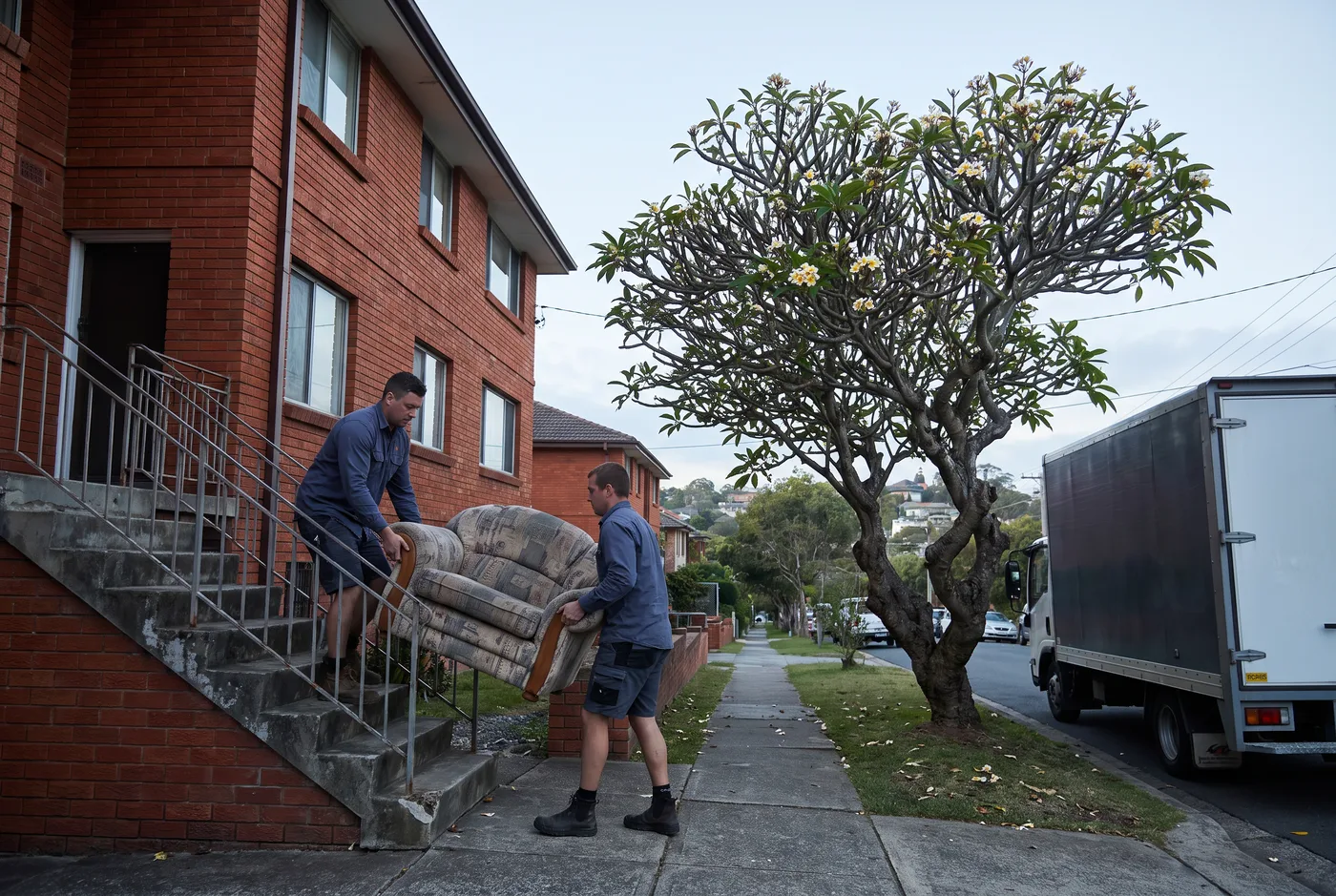
Stairs are the job, not a surcharge
Between Dee Why and Narrabeen the classic building is a two or three storey walk-up: external stairs, a half-landing turn, a rail on one side. Getting a couch down one is exactly the work you're paying two people for, so it belongs inside the figure, not bolted on when the crew sees the block.
Tell us the floor and whether there's a lift when you enquire, and the figure you hear already includes the carry. Third floor, no lift, tight turn at the landing: still one figure. If a doorway needs the feet off or a door off its hinges, that's normal work, not a variation.
One more thing worth knowing: single-item calls have a habit of growing. The fridge, and then actually the balcony chairs, and the box of cables behind the door. Point at the rest when we're there; if the job changes, the figure gets re-agreed before anything else is lifted. Same rule, bigger pile.
On the unit strip, the kerb quota is shared
Houses get two council bulky-goods bookings a year each. On the strip it works differently: in most unit blocks those two collections belong to the whole building, every flat sharing the same pair. Forty units, two kerb piles a year. By March they're often spoken for, and the mattress in the garbage room isn't anyone's problem until it's everyone's.
That's the honest reason a paid pickup earns its keep here. One dead fridge doesn't justify burning a booking the whole building shares, and the left-behind pile after a tenant moves out can't wait for one either. We clear single flats, garbage-room pile-ups and moved-out-and-left-it loads without touching the building's quota at all.
For building and strata managers: we're happy to work to your access rules. Lift windows, loading bays, a contact on site or just a photo of the pile and a gate code. You get the figure in writing before we're booked, and the garbage room back.
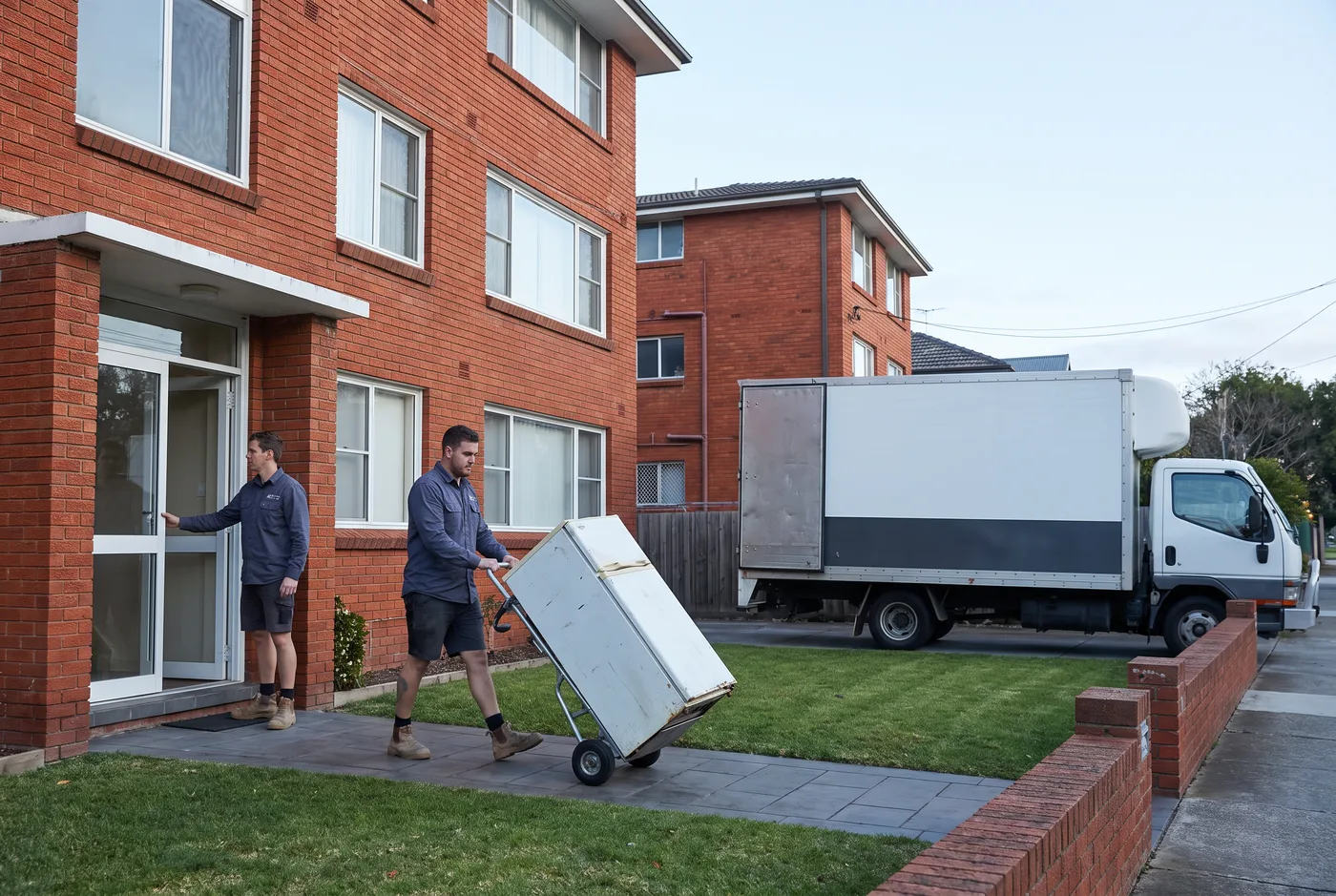
What one item usually is
The three-seater that survived three tenants and won't survive a fourth. The mattress and base after the new one arrived. The washing machine that flooded the laundry on its way out, the bar fridge from the garage, the treadmill that became a clothes rack years ago. One thing, awkward, heavy, and suddenly urgent.
- couches + lounges
- mattresses + bases
- fridges + freezers
- washing machines
- treadmills + exercise gear
- wardrobes + flat-pack casualties
- the left-behind pile
Wondering whether the council kerb pickup would take your item instead? That's a fair question with a checkable answer: run it through the Kerbside Forecast, which uses the council's own rules and will happily point you to their booking page when the kerb genuinely works.
The single-item questions
Is there a minimum charge for one item?
In effect, yes: a truck and two people have to come to you, so a small job has a floor, and anyone who says otherwise is planning to make it up on the day. The difference here is that you hear the whole figure before we drive, and it's the same figure when the job's done.
Do I need to get it down to the street first?
No. The carry is the service. We take it from the room, the balcony or the garbage room it's sitting in. If you could get it to the street easily, you'd probably be reading the council's booking page instead, and fair enough.
Third floor, no lift. Problem?
No, just say so in the enquiry. Floors and stairs change the figure we name, not the figure you end up paying: it's all agreed before we come. Walk-ups between Dee Why and Narrabeen are half this page's work.
We're in a unit block. Whose council booking would one mattress use?
In most blocks, the building's: the council allocates two bulky-goods collections per building per year, shared by every unit. A few blocks are set up so individual units can book two of their own, so it's worth asking your building manager which kind yours is before you count on a kerb slot.
Can a building manager or strata committee book you?
Yes, and they do: garbage-room resets, left-behind loads after a move-out, the common-area pile before an inspection. Send photos of the pile, tell us the access rules, and we'll come back with one figure in writing.
Can it go today?
Sometimes. A single item slots into a run more easily than a whole garage, so same-day happens where the day allows. We offer it when we can see it working; we don't promise clocks we can't hold.
