
Rubbish removal in Dee Why
Dee Why is where the peninsula goes up instead of out: four out of five addresses here are units, and most buildings share two council collections a year between all of them. When the couch has to go and the building's turn already went, we're the other way down: through the lift, out the loading dock, at one figure you'll hear well ahead of any lifting.
middle of the coast run · collaroy above, curl curl below, narraweena up the hill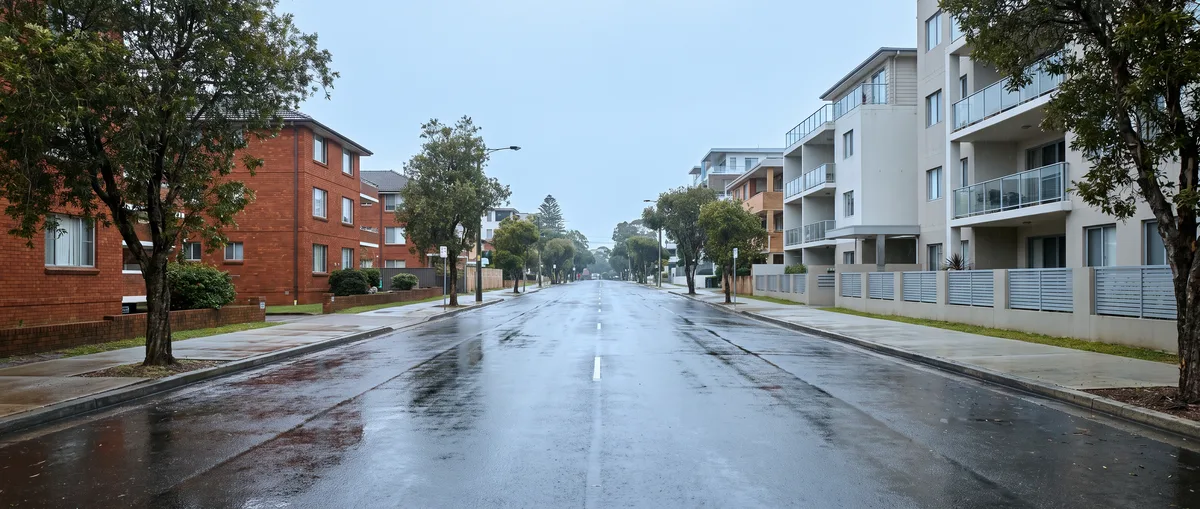
Two collections a year, split between the whole building
A house in Dee Why gets the standard council allowance: two pre-booked kerbside collections in any twelve months, all to itself. A unit block mostly doesn't. Most buildings here share two collections a year building-wide, so the block of forty flats gets the same kerb time as the cottage up the hill, and it's usually spent by autumn.
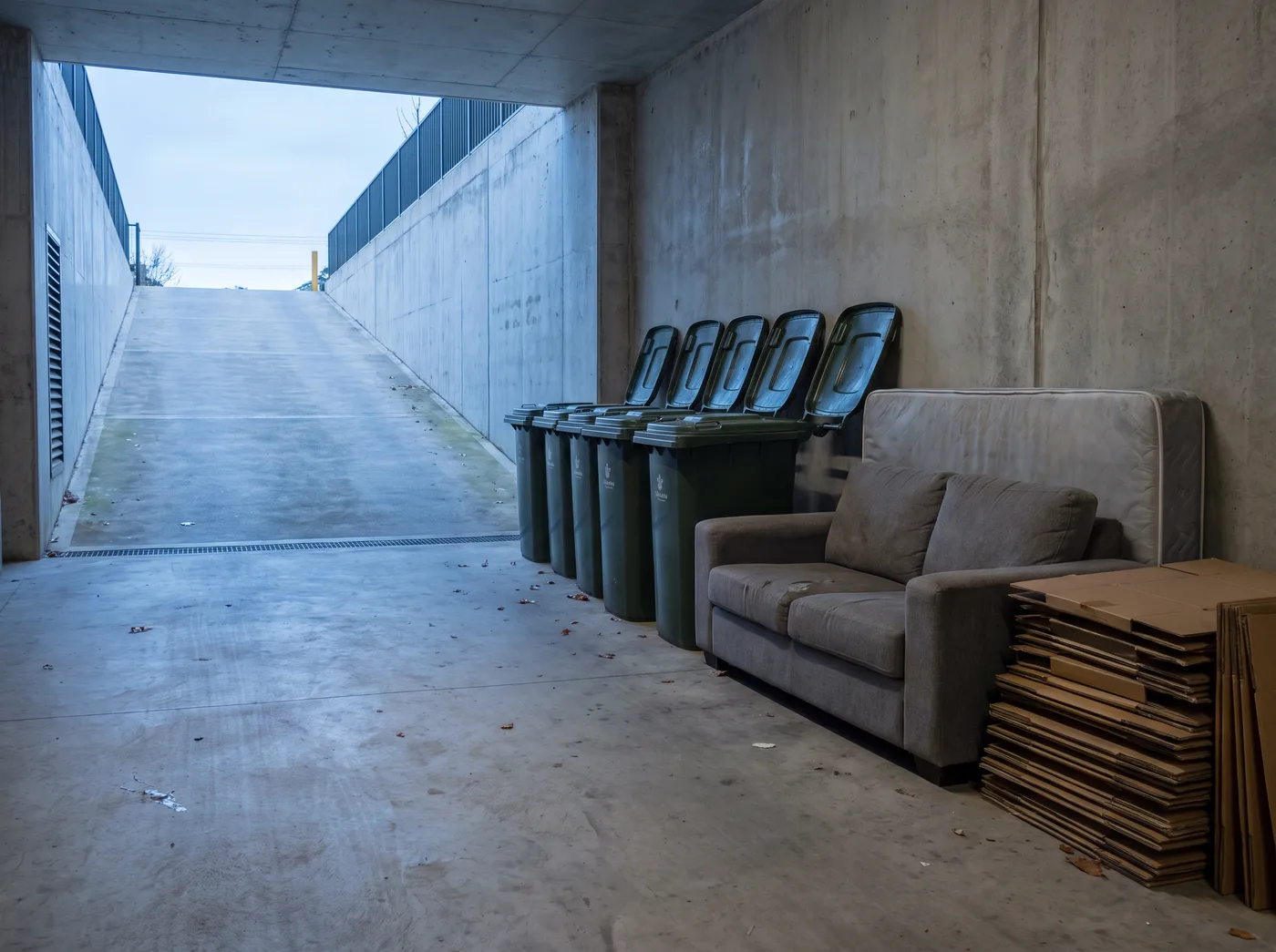
That arithmetic is what fills Dee Why's bin rooms: the couch that missed the last collection, the mattress a tenant left behind, the flat-pack boxes from a building's worth of move-ins. None of it is anyone's fault. It's just what happens when eighty households share one letterbox-sized allowance, and it's most of the reason we work this suburb weekly.
A few buildings are set up so each unit books its own two collections; if yours is one and the pile fits the scheme's rules, use it, it's yours. The Kerbside Forecast will tell you straight, item by item.
Scheme rules: Northern Beaches Council, bulky goods collection. The full comparison: the council cleanup guide.
- four in five addresses are units
- the strip runs on lifts + loading docks
How a unit pickup actually runs
-
Tell us the building, not just the suburb
Which level, lift or walk-up, loading dock or street frontage. In Dee Why the access is half the job, so the enquiry starts there and the figure is right the first time.
-
The window gets agreed before the day
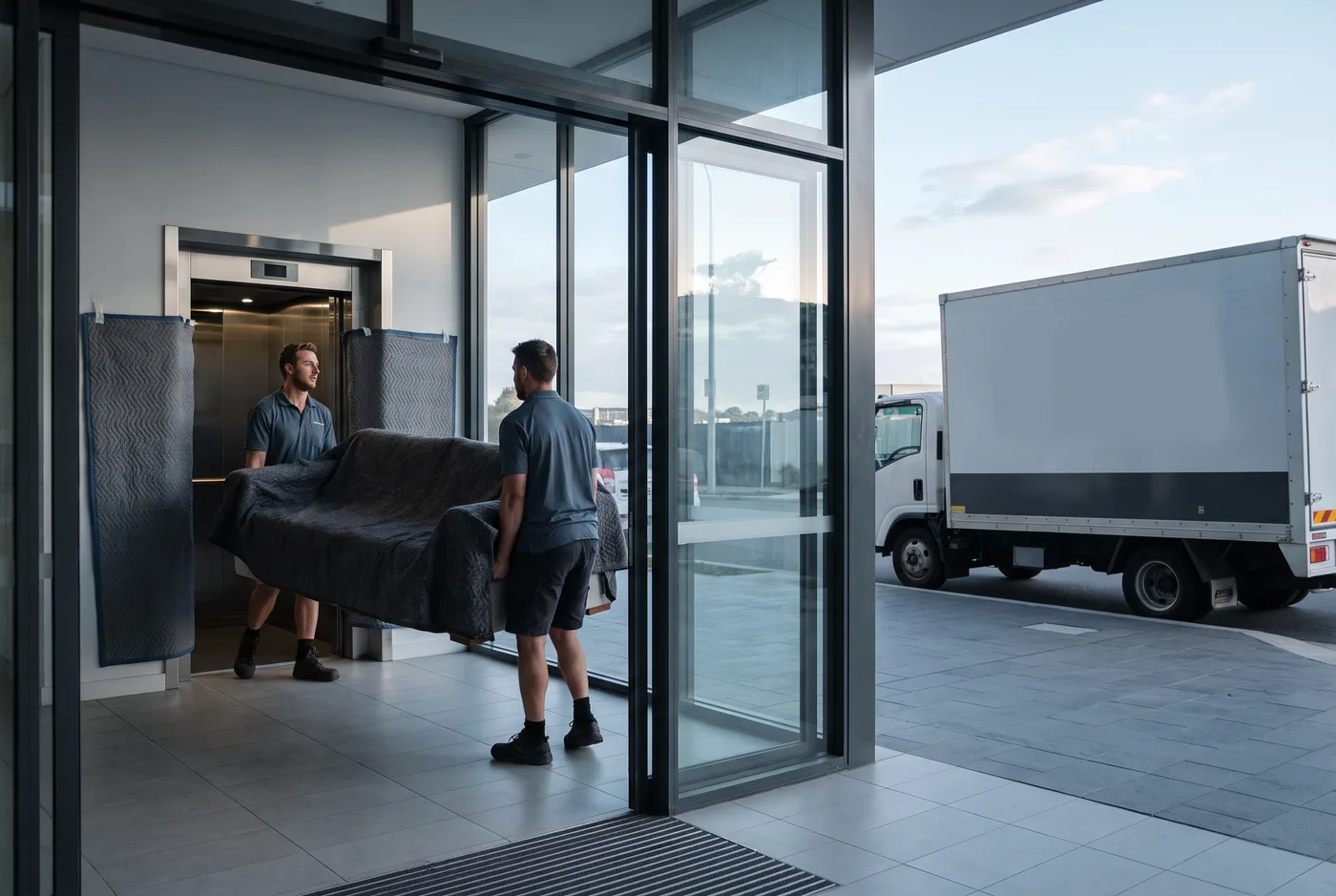
Plenty of buildings want the lift padded and a time slot on the booking sheet. We sort that with you or your building manager beforehand, not standing in the lobby on the morning.
-
Out through the right door
The newer blocks around the town centre load through the basement dock; the older brick walk-ups between the road and the beach go down the stairs and straight out the front. Common areas get covered where they need covering and left as we found them.
-
One figure covers the carry
Floors, lift waits and the trolley run to the truck are all priced in before we lift a thing. The figure we agree is the figure on the invoice.
The building's pile, taken off your list
If you manage a block on the strip you already know the three jobs below. Each one is a single enquiry: a figure in writing before any work, an invoice made out to strata or the managing agent, and photos when it's done. Per job, no contract to sign.
Bin-room overflow
The pile that grows beside the bins between collections, part furniture, part e-waste the kerb scheme refuses anyway. Cleared and sorted into the right streams before it makes the AGM agenda.
Move-out leftovers
The furniture a departing tenant left in the basement. It is somehow always a couch. One visit, gone, invoiced properly, without waiting on a collection the building has already used.
Fire stairs + common areas
Stored goods in exit paths and corridors are exactly the thing inspections flag. One visit clears the lot, and the after-photos are yours for the file.
And the honest version, as always: if your building's own collection is still unbooked and the pile fits the scheme's rules, use the free one first. We'd rather be the crew you ring when the arithmetic genuinely runs out, which around here is often.
Strip work on the commercial heart
The shops and cafes along Pittwater Road and the avenues turn over the way strips do, and every refit leaves the same trailer-load of plasterboard, joinery and dead shopfittings, all of it building material the council scheme refuses outright. We clear fit-out debris and end-of-lease back-of-house pile-ups by the job, and we can work an early window so the skip-sized mess is gone before trade opens.
Renovation strip-outs is the full page; the model is the same at a shop as at a house. One figure, agreed first.
Dee Why still has garages
Up the hill toward Narraweena and along the lagoon side, Dee Why turns back into house country, and those garages fill at the same patient rate as everywhere else on the peninsula. Whole-load clearouts, green waste off the bigger blocks, careful downsizing jobs: the strip may be what Dee Why is known for, but the flagship job lives here too.
Either way it's the same crew and the same promise: the load goes in one visit, and the figure is named before anything moves.
Asked from Dee Why lobbies
Our building's two collections are already used. Are we stuck until next year?
For the shared kerb scheme, yes: once a building's collections are spent, the kerb is closed until the twelve months roll over. That gap is most of the reason we exist in this suburb. One pickup, any size from a single couch up, booked for a day that suits the building.
Do I need strata approval to have furniture taken out?
Your own things out of your own lot need nobody's permission. What buildings care about is the common property in between: lift pads, time windows, sometimes a booking sheet with the building manager. That part is routine for us; tell us which building and we'll arrive squared away.
Can you get a three-seater out of a top-floor walk-up?
Yes. The older brick blocks between the road and the beach were built with stairs and no lift, and that's exactly the job: two carriers, corners taken slowly, walls respected. The stairs are quoted into the figure before we start, and the figure doesn't move on the day.
There's a mattress dumped next to our bins. Whose job is it?
In practice, the building's: the council scheme collects booked items from the kerb, not from inside a bin room, so the mattress sits there until someone deals with it. We do it as a one-off with an invoice the managing agent can file, and the bay gets swept while we're at it.
Can you come when the lift is quiet?
That's usually the plan: early before the school run, or mid-morning once the commuters are gone. We book the window that suits the building, and where the day's run allows a same-day pickup we'll offer it rather than promise it.
