
Rubbish removal in Terrey Hills
Terrey Hills is the peninsula at acreage scale: two hundred metres up, ringed by national park on three sides, and storing things in machinery sheds that make a double garage look like a kitchen drawer. The loads run bigger up here. The model doesn't change: one visit, one all-in figure, agreed before a single thing leaves the shed.
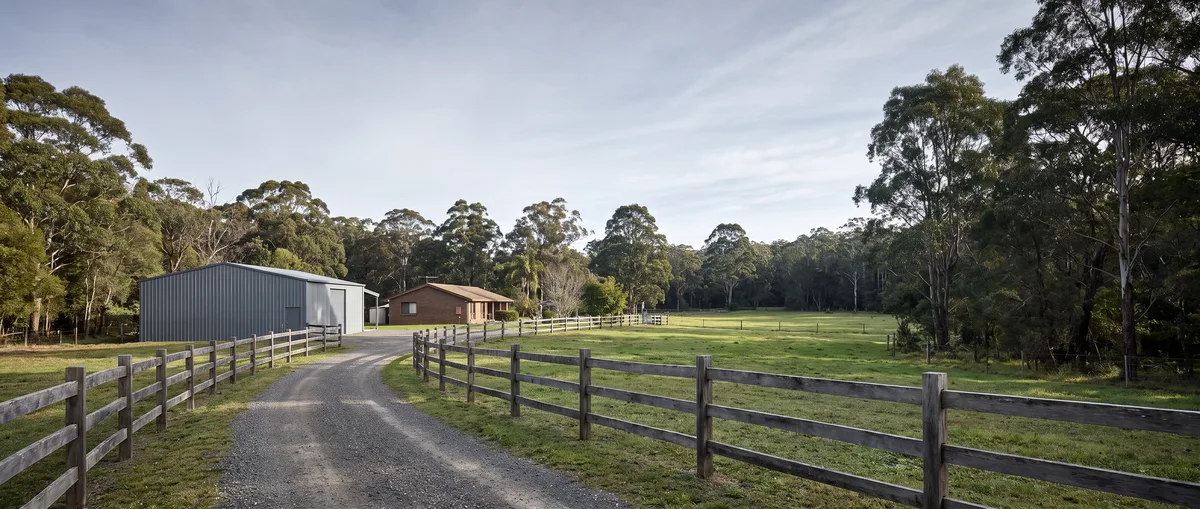
The machinery shed, thirty years in
Suburbs store by the garage; Terrey Hills stores by the shed, and a shed on an acre block never once says no. The workbench disappears first. Then the timber rack fills, the second bay goes to the mower and the gear that came with the horses, and one decade later there's a corridor down the middle and a car that has never been inside.
Shed resets are our favourite version of the whole-load job: big, honest volumes with room to work. We bring the crew the volume needs, sort the streams on the tray as it's loaded, and the figure you agreed to covers everything from the back wall to the swept slab, tip fees included.
- the dead ride-on
- hardwood offcuts by the rack
- star pickets + fencing wire
- irrigation pipe coils
- feed bins + old tack
- a drum of mystery rope
- the trailer that stopped being repairable
Two acreage honesty notes. Fuel tins, chemicals and anything pressurised stay off our tray, and up here there's usually more of them, so we'll point each one to its proper drop-off while we quote. And a genuinely running mower or a usable float is worth selling before it's worth tipping; we'd rather say so than load it.
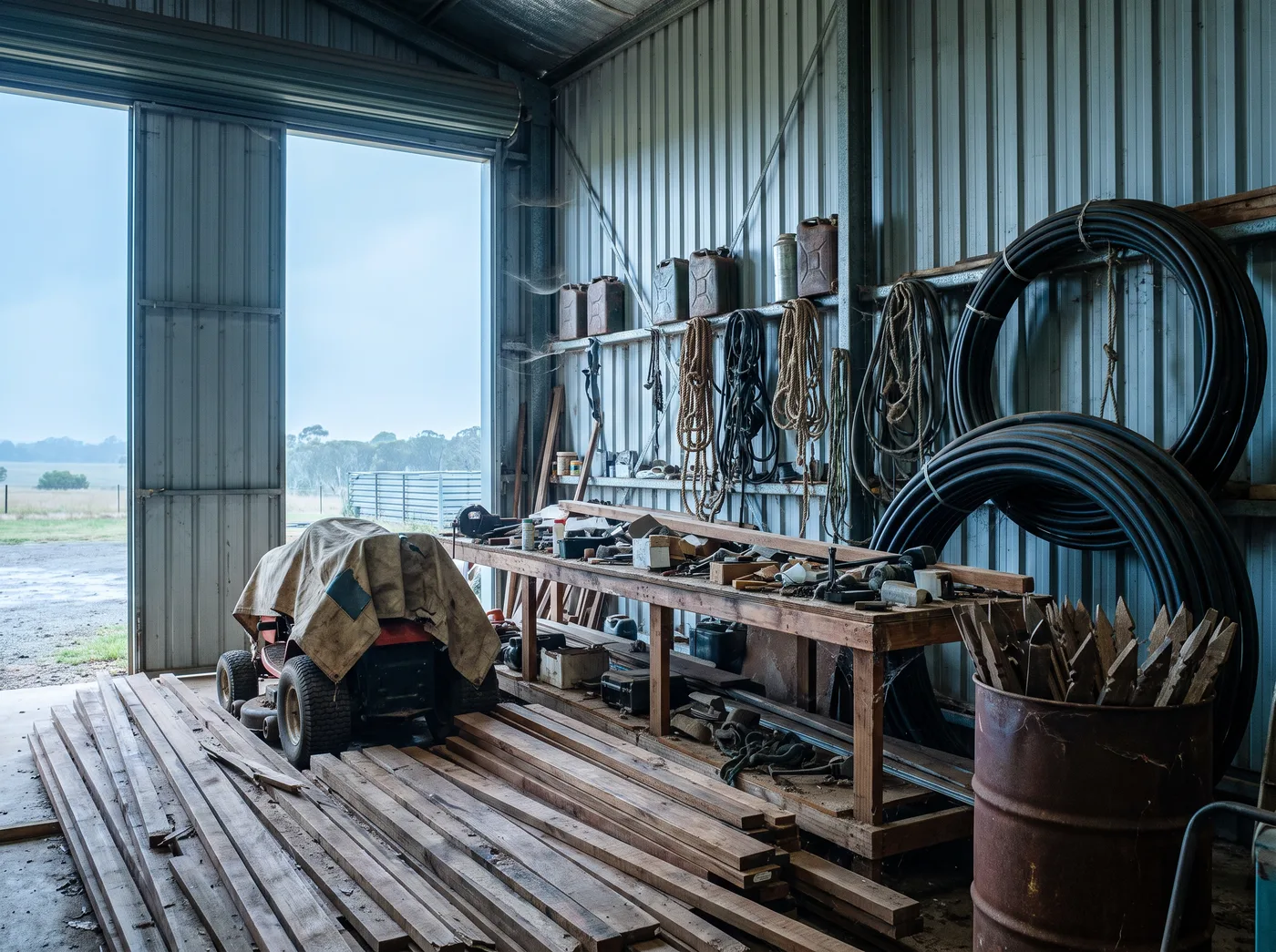
One figure, even when it takes two trucks
Terrey Hills runs to 1,372 addresses, the shortest list of any suburb we work: Dee Why fits eleven of it. What the short list hides is the arithmetic per gate, because when an acre block finally lets go of its shed, the load is the biggest kind we quote, and a job that size only stays simple if it's sized before it's booked.
So that's the order we do it in. We look at the load first and walk the carry with you, then size the day to the volume: more hands when the shed wants more hands, a second truck or a return run when one tray was never going to do it. All of that lands inside the same single figure, named while we're still standing in the shed. If it takes two trucks, you heard that before the day arrived, and so did the figure.
Scale cuts both ways, for the record. One dead fridge at the end of a long Booralie Road driveway is still a booking, and a careful estate clearance up here gets the same unhurried manners it gets anywhere on the run.
What moves a figure, and why there's no price list: how the fixed price works.
Three cubic metres, measured against a shed bay
Terrey Hills gets the same council allowance as a Curl Curl semi: two pre-booked kerbside collections in any twelve months, three cubic metres per booking, items under 1.8 metres that two people can lift. Fair scheme, honestly run, and for a tidy household load we'll tell you to take the free option first.
But acreage waste fails the scheme three ways at once. The volumes are shed-sized, not booking-sized. Half the pile is the scheme's refusal list: fencing timber past a dozen palings, anything from the stable reno, the mower. And the pile has to reach the kerb, which on Booralie Road frontages can be a hundred-metre wheelbarrow relay before the scheme has taken a single thing. The carry is the job; it's the part we bring.
Scheme rules: Northern Beaches Council, bulky goods collection. Item-by-item version: the Kerbside Forecast.
For once, drive right up
Everywhere else on the peninsula the question is whether the truck can get close. Up here the answer is usually all the way: gravel drives with real turning room, gates that open wide, and the load sitting in one big obvious place. What replaces the stair carry is distance inside the property, shed to truck, paddock corner to truck, and we walk it with you before the figure is named so nothing about the day is a discovery.
The run works in your favour too. Mona Vale Road drops straight off the ridge to the coast and Forest Way runs it south, so Terrey Hills sits between our two spines rather than beyond them. Duffys Forest and Ingleside are the same call: if the property has a gate on one of these roads, it's local work.
Paddock edges make truck-scale green
An acre of boundary against two national parks grows garden work that suburbia never sees: windbreak prunes, a paddock edge pushed back, the pile behind the muck heap that was going to be a bonfire before the neighbours got polite about it. All of it travels as a sorted green load, cut to liftable by us, and it shares the truck with a shed load whenever the two jobs have been waiting on each other.
Standing trees and anything still attached stay an arborist's work, up here same as everywhere; our part starts where gravity finished.
Asked over farm gates
It's not a garage, it's a nine-by-six shed. Can one visit really do it?
Yes, because it's booked as what it is. A nine-by-six gets sized bay by bay when we walk it, the day gets the crew and the trucks the volume asks for, and you get one figure for the lot. The only thing a bigger shed changes is how many of us turn up.
Do you take fencing wire, pickets and rural steel?
Gladly. Metal comes off the load as its own stream, wire, pickets, roofing offcuts, the retired gate, and travels to scrap rather than landfill. It's some of the easiest sorting we do.
There are old fuel tins and spray drums in the corner. Yours?
Not ours, and not anyone's tray, honestly. Fuel, chemicals and pressurised bottles need their proper drop-offs, and acreage sheds collect more of them than anywhere. We'll name the right path for each while we're quoting the rest, so the corner gets dealt with instead of inherited.
The pile's at the back paddock, nowhere near the drive.
Say so and we'll plan for it. Long carries and rough ground are quoted into the figure up front, and if a load genuinely wants machinery rather than shoulders we'll tell you that too, before anything is booked.
Are we too far out for you? Everyone else seems to think so.
You're the top of our home run, not the edge of someone else's. The ridge run ends here on purpose: Frenchs Forest, Belrose, Terrey Hills, week in, week out, with Duffys Forest and Ingleside along the way.
